Call 2-1-1 for local resources · Life-threatening emergencies: 9-1-1
Back to education guides

Substance education guide

Cocaine (Cocaine Hydrochloride)

Powerful short-acting CNS stimulant · Local anesthetic · Tropane alkaloid · Schedule II

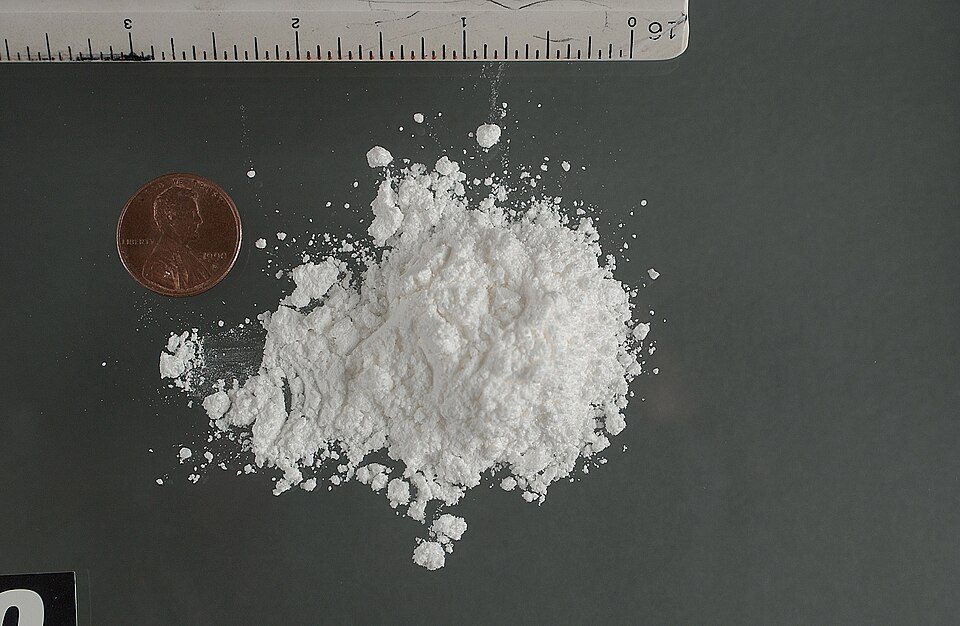
Representative photo of Cocaine (Cocaine Hydrochloride)What it looks like
Image: An employee of the DEA · Public domain · Wikimedia Commons. Appearance varies; illicit products may look different or be counterfeit.

01 · How it works

Classification and primary mechanism

Cocaine is a powerful short-acting central nervous system stimulant and local anesthetic derived from Erythroxylum coca. It reversibly blocks the dopamine, serotonin, and norepinephrine transporters, producing acute euphoria and motor activation. It also blocks voltage-gated sodium channels in peripheral nerves and myocardial tissue, widening the QRS interval and increasing vulnerability to fatal ventricular arrhythmias.

02 · Immediate effects

Recognize the effects

Signs of Use

  • Intense euphoria, grandiosity, and inflated confidence
  • Tachycardia, acute blood-pressure elevation, and dilated pupils
  • Hyper-arousal, compulsive redosing, anxiety, or paranoia
  • Chest tightness, bruxism, sweating, tremors, and rapid breathing
  • Nasal irritation, nosebleeds, injection marks, or severe agitation

Short Term

  • Low to moderate: alertness, reduced need for food or sleep, and elevated temperature
  • Moderate to high: hyper-arousal, irritability, emotional lability, and compulsive redosing
  • Severe toxicity: psychosis, tactile hallucinations, delirium, or acute confusion
  • Hypertension, coronary vasospasm, arrhythmia, seizure, and hyperthermia
  • Possible opioid overdose when fentanyl contamination is present

Long Term

  • Cocaine use disorder, craving, and escalating compulsive use
  • Depression, anxiety, sleep disruption, and post-use fatigue
  • Cardiomyopathy, coronary disease, myocardial infarction, and stroke
  • Nasal septum damage, pulmonary injury, and injection-related infections
  • Levamisole-related agranulocytosis, skin necrosis, and immune injury

03 · Long-term consequences

Clinical, commercial, and street context

Medical cocaine is a Schedule II prescription limited to rare topical mucosal anesthesia, such as selected nasal or ophthalmic surgery. Street cocaine is usually a water-soluble crystalline hydrochloride salt used by nasal insufflation or injection and may be cut with levamisole, phenacetin, benzocaine, lidocaine, caffeine, or fentanyl.

Medical emergency

Identifying an emergency

Call 911 for chest pain, severe headache, one-sided weakness, seizure, trouble breathing, collapse, extreme agitation, delirium, or high temperature. Give naloxone if opioid contamination is possible, provide rescue breathing or CPR when needed, and move the person away from hazards.

Never mix cocaine with alcohol, opioids, or other stimulants; naloxone will not reverse cocaine toxicity but may reverse a concealed opioid overdose
Back to education guides