Call 2-1-1 for local resources · Life-threatening emergencies: 9-1-1
Back to education guides

Substance education guide

Crack Cocaine (Freebase Cocaine)

High-potency, rapid-onset CNS stimulant · Freebase form of cocaine

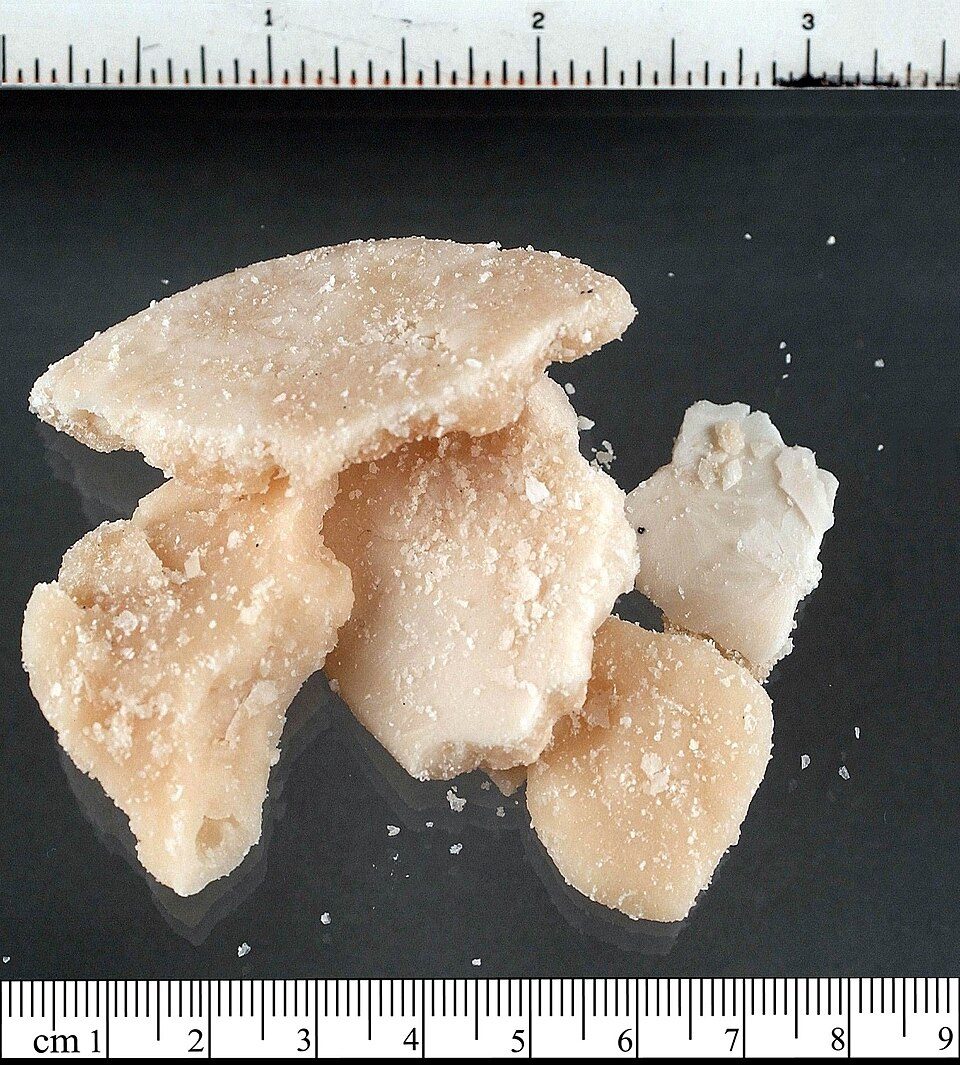
Representative photo of Crack Cocaine (Freebase Cocaine)What it looks like
Image: DEA · Public domain · Wikimedia Commons. Appearance varies; illicit products may look different or be counterfeit.

01 · How it works

Classification and primary mechanism

Crack cocaine is the freebase form of cocaine hydrochloride. It produces the same non-selective dopamine, norepinephrine, and serotonin reuptake inhibition along with cardiac sodium-channel blockade. Its lower melting point allows vaporization; inhaled freebase reaches the brain in roughly 5 to 8 seconds, creating an intense dopamine spike followed by an abrupt crash.

02 · Immediate effects

Recognize the effects

Signs of Use

  • Off-white, yellowish, or translucent rocks and glass stems
  • Immediate euphoria, hyper-alertness, and feeling invincible
  • Severe paranoia, panic, sensory hyper-reactivity, or frantic searching
  • Sweating, dilated pupils, jaw clenching, and rapid breathing
  • Chest pain, shortness of breath, burns, or charred fingers and lips

Short Term

  • Low to moderate: intense euphoria, mental alertness, and sudden blood-pressure elevation
  • High or binge state: paranoia, panic, tachycardia, vasoconstriction, sweating, and chest pain
  • Severe toxicity: acute toxic psychosis, delirium, hyperthermia, and loss of environmental reality
  • Lethal ventricular arrhythmias, myocardial infarction, stroke, and seizures
  • Abrupt dysphoria, depression, craving, and compulsive redosing after the rush

Long Term

  • Crack lung, alveolar hemorrhage, and chronic pulmonary injury
  • Coronary artery disease, cardiomyopathy, heart attack, and stroke
  • Severe dental decay, oral burns, and respiratory irritation
  • Chronic paranoid psychosis and persistent anxiety
  • Cocaine use disorder, tolerance, and dopamine-system adaptation

03 · Long-term consequences

Crack lung and cardiotoxicity

Hot smoke and contaminants can injure alveolar membranes and cause crack lung, hemorrhage, pneumothorax, or respiratory failure. Severe vasoconstriction and sodium-channel blockade can trigger sudden cardiac arrest. Illicit rocks may retain toxic residues, heavy cutting agents, or synthetic opioids.

Medical emergency

Identifying an emergency

Call 911 for crushing chest pain, severe shortness of breath, blue lips, extreme hyperthermia, violent paranoia, seizure, collapse, or inability to wake. Give naloxone if opioid contamination is possible; it will not reverse stimulant toxicity but may reverse a concealed opioid overdose.

Never mix crack with alcohol or other stimulants; alcohol can form cocaethylene and increase cardiac toxicity
Back to education guides