Call 2-1-1 for local resources · Life-threatening emergencies: 9-1-1
Back to education guides

Substance education guide

GHB (Gamma-Hydroxybutyrate)

CNS depressant · GABA-B agonist · Schedule I illicit compound

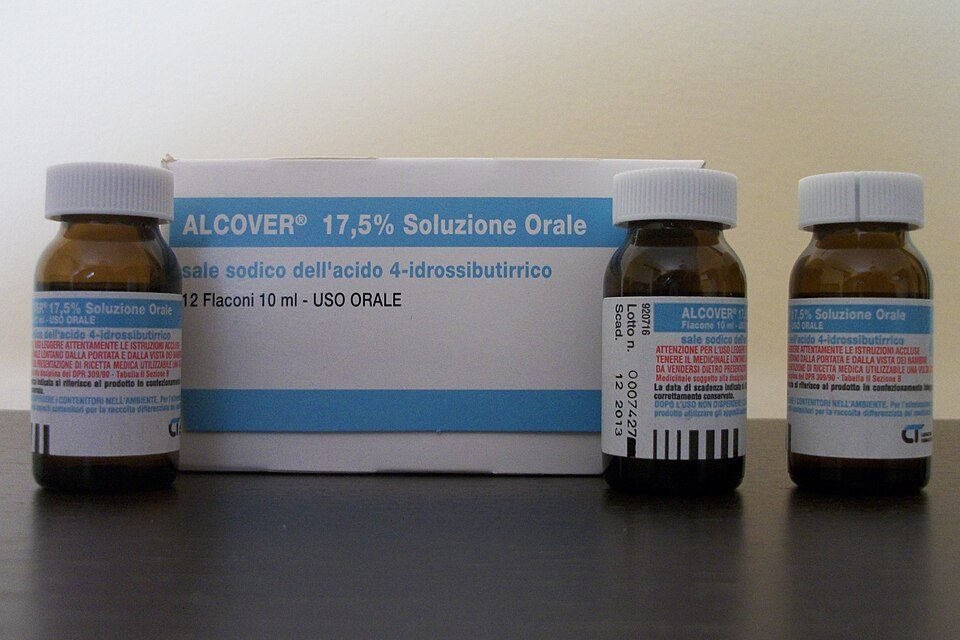
Representative photo of GHB (Gamma-Hydroxybutyrate)What it looks like
Image: La Cara Salma · CC BY-SA 3.0 · Wikimedia Commons. Appearance varies; illicit products may look different or be counterfeit.

01 · How it works

Classification and primary mechanism

GHB acts at specific GHB receptors and as a direct agonist at inhibitory GABA-B receptors. Its effects are biphasic and its elimination is non-linear: a small dose increase can shift mild relaxation into profound sedation, coma, or respiratory arrest.

02 · Immediate effects

Recognize the effects

Signs of Use

  • Sudden drowsiness, confusion, or disinhibition
  • Slurred speech, ataxia, and heavy salivation
  • Nausea, vomiting, or emotional volatility
  • Amnesia or inability to stay awake
  • Slow, irregular, or absent breathing

Short Term

  • Low exposure: relaxation, mild euphoria, and lowered inhibition
  • Moderate exposure: confusion, extreme drowsiness, and anterograde amnesia
  • Severe toxicity: sudden loss of consciousness and coma-like sleep
  • Respiratory depression, bradycardia, hypotension, and vomiting
  • Dopamine rebound as high-dose sedation wears off abruptly

Long Term

  • Tolerance and severe physical dependence
  • Withdrawal with insomnia, anxiety, tremor, agitation, and delirium
  • Seizures and dangerous autonomic instability during withdrawal
  • Hypoxic brain injury after a nonfatal overdose
  • Sexual assault and other harms during incapacitation

03 · Long-term consequences

Respiratory depression and withdrawal

GHB is used medically in a tightly controlled sodium oxybate formulation for narcolepsy with cataplexy. Street GHB is often a colorless, odorless liquid called G, while GBL and 1,4-butanediol convert to GHB in the body. Mixing any of these with alcohol, opioids, benzodiazepines, or other sedatives can be fatal.

Medical emergency

Identifying an emergency

Call 911 immediately for unconsciousness, slow or absent breathing, blue or gray skin, repeated vomiting, seizure, collapse, or inability to wake. Place the person on their side if breathing, give rescue breathing or CPR when needed, and do not leave them alone.

Never mix GHB, GBL, or 1,4-butanediol with alcohol, opioids, benzodiazepines, or other depressants
Back to education guides