Call 2-1-1 for local resources · Life-threatening emergencies: 9-1-1
Back to education guides

Substance education guide

Ketamine

Arylcyclohexylamine · Dissociative anesthetic · NMDA antagonist

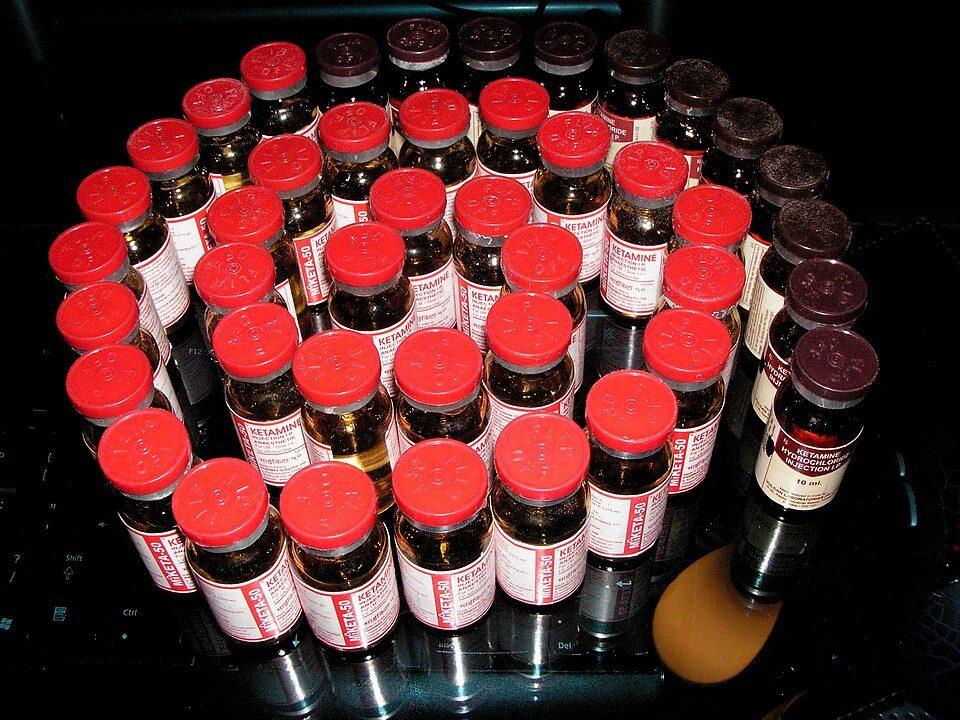
Representative photo of KetamineWhat it looks like
Image: Psychonaught · CC0 · Wikimedia Commons. Appearance varies; illicit products may look different or be counterfeit.

01 · How it works

Classification and primary mechanism

Ketamine is an arylcyclohexylamine dissociative anesthetic that blocks open NMDA glutamate receptor channels. By interrupting excitatory signaling between the thalamus and cortex, it disconnects conscious awareness from sensory and bodily input. Downstream BDNF and mTOR signaling contributes to neuroplasticity and its clinical use in treatment-resistant depression.

02 · Immediate effects

Recognize the effects

Signs of Use

  • Dreamy dissociation, altered space, and audio-visual distortion
  • Nystagmus, slurred speech, and loss of balance
  • Delayed thinking, impaired judgment, and reduced pain sensitivity
  • Profound detachment, amnesia, or temporary paralysis
  • Vomiting, chest pain, severe agitation, or inability to wake

Short Term

  • Low exposure: lightness, mild intoxication, and elevated blood pressure
  • Moderate exposure: body disconnection, delayed thought, clumsiness, and sensory distortion
  • High exposure: K-hole dissociation, vivid hallucinations, amnesia, and loss of environmental awareness
  • Increased heart rate, hypertension, nystagmus, nausea, and impaired coordination
  • Severe toxicity: aspiration, respiratory compromise, seizures, unconsciousness, or dangerous behavior

Long Term

  • Ketamine use disorder, tolerance, and escalating exposure
  • Urinary frequency, painful bladder syndrome, and ketamine cystitis
  • Hematuria, ureteral injury, and kidney damage
  • Liver and bile-duct injury
  • Memory, attention, mood, and cognitive changes

03 · Long-term consequences

Dissociation and organ injury

Although ketamine is a monitored human and veterinary anesthetic, diverted or illicit products have unpredictable strength and purity. Dissociation can mask injuries, impair consent, and increase drowning, falls, and traffic risks. Repeated heavy use can cause severe bladder and biliary disease.

Medical emergency

Identifying an emergency

Call 911 for unconsciousness, slow or absent breathing, seizure, chest pain, severe agitation, repeated vomiting, collapse, or suspected aspiration. Place the person on their side if breathing but unconscious, protect them from hazards, and provide rescue breathing or CPR when needed.

Never use ketamine alone or combine it with alcohol, opioids, benzodiazepines, or other depressants
Back to education guides