Call 2-1-1 for local resources · Life-threatening emergencies: 9-1-1
Back to education guides

Substance education guide

Kratom (Mitragyna speciosa)

Botanical atypical opioid agonist · Adrenergic modulator

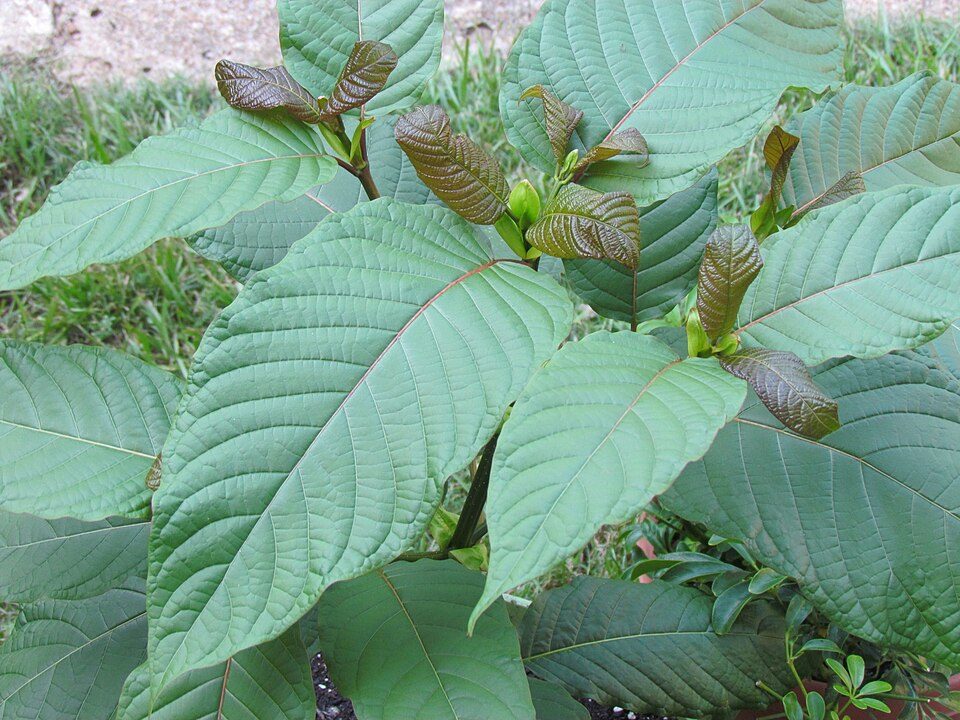
Representative photo of Kratom (Mitragyna speciosa)What it looks like
Image: ThorPorre · CC BY 3.0 · Wikimedia Commons. Appearance varies; illicit products may look different or be counterfeit.

01 · How it works

Classification and primary mechanism

Kratom is a Southeast Asian botanical containing more than 40 bioactive alkaloids. Mitragynine acts as a partial agonist at mu-opioid and alpha-2 adrenergic receptors, while also affecting serotonin 5-HT2A and dopamine D2 systems. CYP3A4 converts some mitragynine into 7-hydroxymitragynine, a much more potent mu-opioid agonist. Effects are biphasic: lower amounts tend to be stimulant-like, while higher amounts become opioid-like and sedating.

02 · Immediate effects

Recognize the effects

Signs of Use

  • Low-dose alertness, focus, chattiness, and mild energy
  • High-dose sedation, pain relief, emotional blunting, and drowsiness
  • Nausea, constipation, sweating, dry mouth, or itching
  • Dizziness, confusion, tremor, or impaired coordination
  • Severe toxicity, seizure, slowed breathing, or inability to wake

Short Term

  • Low exposure: stimulation, increased focus, social energy, mild tachycardia, and reduced appetite
  • Moderate to high exposure: calm, analgesia, sedation, nausea, constipation, and slowed reaction time
  • High exposure: confusion, vomiting, respiratory depression, seizures, or loss of consciousness
  • Extracts and concentrated shots can produce stronger, less predictable effects than raw leaf
  • Combining kratom with alcohol, opioids, benzodiazepines, or other sedatives increases overdose risk

Long Term

  • Tolerance, escalating use, and kratom use disorder
  • Physical dependence and withdrawal with anxiety, insomnia, irritability, muscle aches, diarrhea, and restlessness
  • Liver injury, including cholestatic hepatitis and jaundice
  • Seizures, hypertension, and cardiac effects in severe or complicated toxicity
  • Lead, nickel, Salmonella, and other contamination risks in poorly controlled products

03 · Long-term consequences

Variable extracts and contamination

Kratom is widely sold as dried leaf, powder, tablets, tea, and concentrated liquid extracts, often without standardized dosing. Independent testing has identified heavy metals and pathogenic bacteria, while adulterated products such as concentrated 7-hydroxymitragynine can behave more like potent opioids.

Medical emergency

Identifying an emergency

Call 911 for slowed or absent breathing, seizure, chest pain, severe confusion, yellow skin or eyes, collapse, or inability to wake. Give naloxone if opioid toxicity is possible, provide rescue breathing or CPR when needed, and do not leave the person alone.

Avoid mixing kratom with alcohol, opioids, benzodiazepines, or other depressants; concentrated extracts are especially unpredictable
Back to education guides