Call 2-1-1 for local resources · Life-threatening emergencies: 9-1-1
Back to education guides

Substance education guide

MDMA (3,4-Methylenedioxymethamphetamine)

Synthetic substituted phenethylamine · Entactogen, empathogen, and CNS stimulant

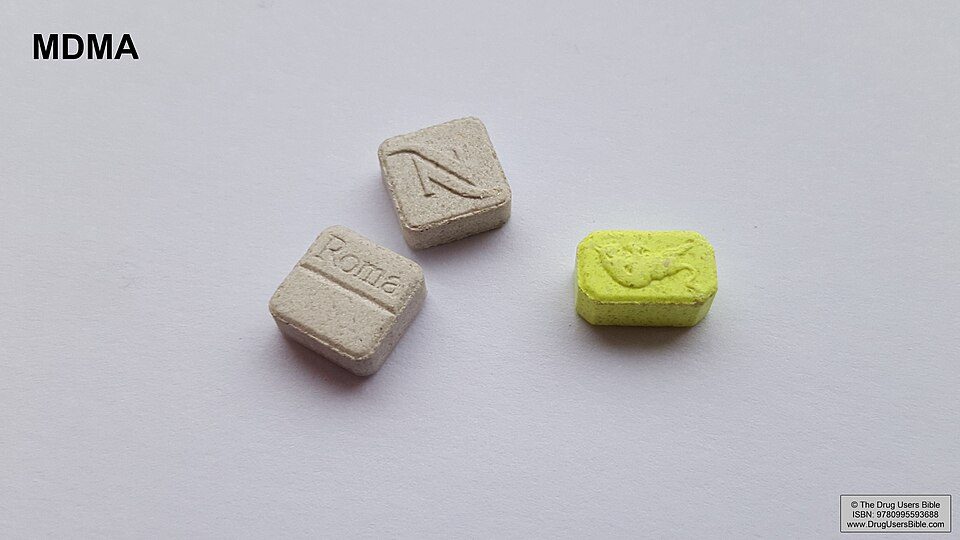
Representative photo of MDMA (3,4-Methylenedioxymethamphetamine)What it looks like
Image: The Drug Users Bible · CC BY 2.0 · Wikimedia Commons. Appearance varies; illicit products may look different or be counterfeit.

01 · How it works

Classification and primary mechanism

MDMA binds to and reverses VMAT2 and presynaptic serotonin transporters, causing a large efflux of serotonin into the synaptic cleft. It also reverses dopamine and norepinephrine transporters, although its serotonergic activity is substantially stronger than traditional amphetamines. Serotonin release increases oxytocin and prolactin, while arginine vasopressin suppresses the kidneys’ ability to excrete water.

02 · Immediate effects

Recognize the effects

Signs of Use

  • Dilated pupils, jaw clenching, bruxism, and lip biting
  • Profuse sweating, hot flashes, and elevated body temperature
  • Elevated heart rate, blood pressure, and cardiac palpitations
  • Intense empathy, emotional openness, and sensory enhancement
  • Confusion, visual fluttering, urinary retention, or severe agitation

Short Term

  • Typical exposure: euphoria, empathy, enhanced tactile sensation, emotional openness, and energy
  • Physiologic activation: bruxism, dilated pupils, tachycardia, hypertension, sweating, and appetite suppression
  • High or repeated exposure: emotional instability, confusion, sensory overwhelm, nystagmus, hyperthermia, and urinary retention
  • Excessive water intake can cause headache, nausea, vomiting, confusion, seizures, coma, and cerebral edema
  • After-effects may include fatigue, low mood, anxiety, insomnia, and impaired concentration for several days

Long Term

  • Serotonergic axon-terminal injury and receptor down-regulation with heavy or repeated use
  • Mood, anxiety, sleep, and verbal working-memory problems
  • Tolerance, compulsive redosing, and substance use disorder
  • Cardiovascular strain and dental injury from bruxism
  • Risk from unknown adulterants including synthetic cathinones, methamphetamine, caffeine, dextromethorphan, and novel stimulants

03 · Long-term consequences

Adulteration and water-balance emergencies

MDMA is being investigated in structured clinical trials for assisted psychotherapy for treatment-resistant PTSD, but illicit Ecstasy and Molly are not standardized medicines. Products may be brightly colored pressed tablets, crystals, or capsules and may contain little or no MDMA. Never assume a logo or appearance confirms identity or dose.

Medical emergency

Identifying an emergency

Call 911 for a temperature above 104°F, severe headache, confusion, muscle rigidity, seizure, repeated vomiting, chest pain, collapse, or altered consciousness. Move the person to a cooler area, reduce stimulation, stay with them, and do not force large amounts of water.

Critical interaction: combining MDMA with SSRIs, MAOIs, or other serotonergic drugs can increase serotonin-syndrome risk
Back to education guides