Call 2-1-1 for local resources · Life-threatening emergencies: 9-1-1
Back to education guides

Substance education guide

Medetomidine (Rhino Tranq)

Ultra-potent alpha-2 adrenergic agonist · Veterinary sedative · Non-opioid adulterant

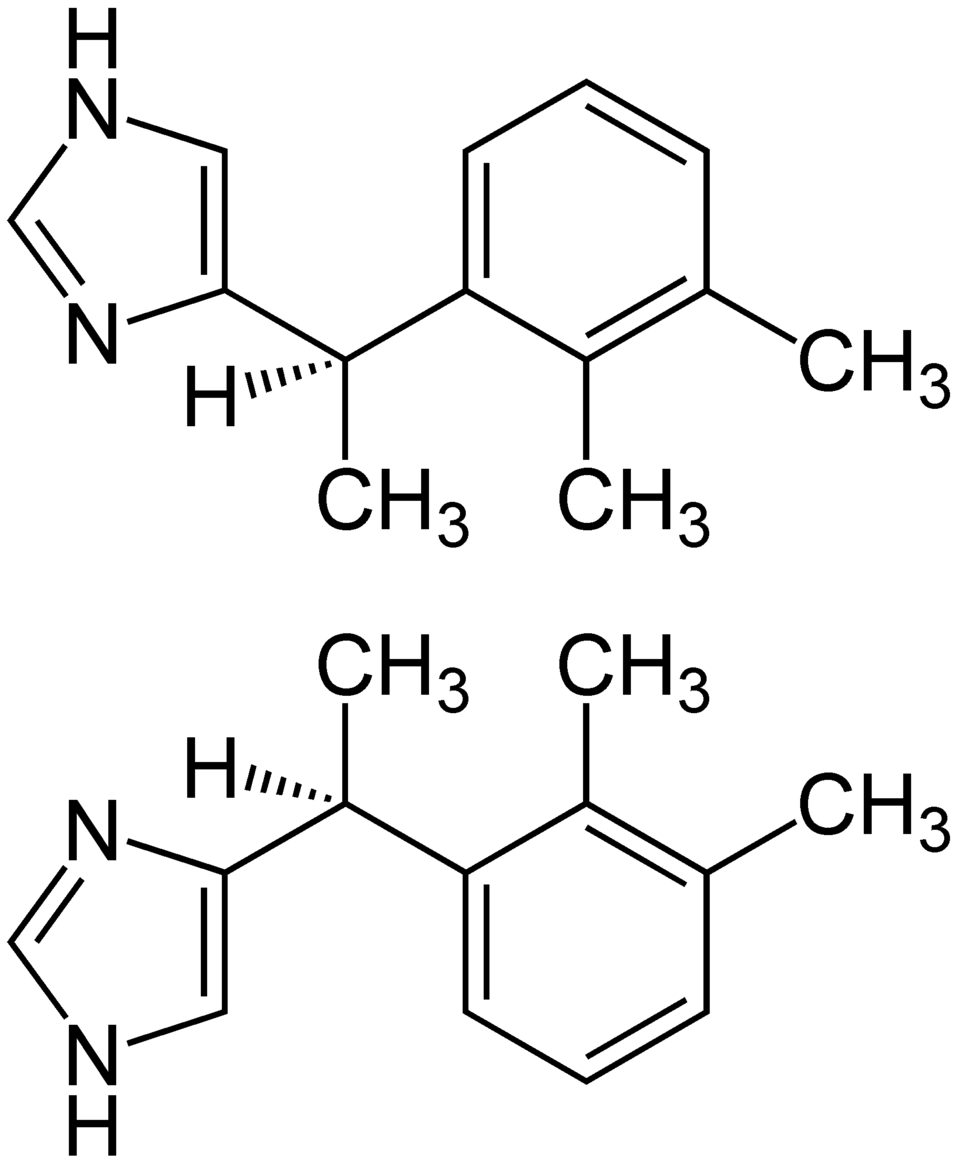
Chemical structure of Medetomidine (Rhino Tranq)Chemical structure
Image: Jü · Public domain · Wikimedia Commons. Appearance varies; illicit products may look different or be counterfeit.

01 · How it works

Classification and primary mechanism

Medetomidine is a synthetic imidazole derivative and highly selective alpha-2 adrenergic receptor agonist. It activates presynaptic alpha-2 receptors in the locus coeruleus, sharply reducing central norepinephrine release and sympathetic outflow to the heart, blood vessels, and respiratory system. It is a racemic mixture containing the active enantiomer dexmedetomidine, with approximately 200 to 300 times greater alpha-2 selectivity than alpha-1 receptors and an estimated 100 to 200 times the potency of xylazine.

02 · Immediate effects

Recognize the effects

Signs of Use

  • Rapid heavy sedation and mental detachment
  • Profound bradycardia, pale skin, and vasoconstriction
  • Unarousable stupor or inability to stand
  • Low blood pressure, hypothermia, and dry mouth
  • Slow, shallow, or absent breathing
  • Unresponsive collapse or cardiac conduction changes

Short Term

  • Low exposure: rapid sedation, blunted pain perception, and mental detachment
  • Moderate exposure: deep stupor, loss of motor control, hypotension, hypothermia, and slow breathing
  • Severe toxicity: coma, extreme bradycardia below 30 to 40 beats per minute, conduction block, and respiratory arrest
  • Sedation can conceal opioid overdose and delay recognition of respiratory failure
  • Naloxone does not reverse medetomidine itself, though it may reverse co-occurring opioid toxicity

Long Term

  • Unpredictable overdose risk from hidden adulteration
  • Repeated hypoxic injury after nonfatal respiratory depression
  • Falls, aspiration, and prolonged immobilization injuries
  • Cold exposure and tissue injury during prolonged sedation
  • Compounded risk when mixed with fentanyl, heroin, xylazine, or other depressants

03 · Long-term consequences

Bradycardia, respiratory arrest, and testing gaps

Medetomidine is formulated as an injectable veterinary sedative and surgical analgesic for canines and other non-food animals, with no approved human clinical use. In street powders, uneven mixing and the absence of a standard field test make dose and exposure impossible to judge.

Medical emergency

Identifying an emergency

Call 911 for unresponsiveness, slow or absent breathing, blue or gray skin, extreme bradycardia, collapse, seizure, or inability to wake. Give naloxone if opioid exposure is possible, provide rescue breathing or CPR when needed, place the person on their side if breathing, and continue monitoring because naloxone will not reverse medetomidine sedation itself.

Call 911 and give naloxone for possible opioid exposure; rescue breathing and CPR remain essential
Back to education guides